
Cross-Border Motorcycle Transport (SADC Region): A Complete Guide for South Africans
TL;DR: Secure, Flexible, and Informed Motorcycle Transport in SADC
Looking to move your motorcycle across borders in the SADC region? Whether you’re buying, selling, relocating, or attending a rally, this guide explains the practical steps, costs, risks, and best practices for South Africans. It covers everything from booking and legal documentation to real risks, insurance, and how to compare providers confidently for routes connecting Johannesburg, Durban, Gaborone, Windhoek, and beyond.
Introduction: Real-World Challenges When Moving Motorcycles Across Borders
The thrill of owning or buying a motorcycle—whether a classic BMW GS, Harley-Davidson, or adventure bike—often comes with the headache of long-distance transport, especially beyond South Africa’s borders into neighbouring SADC countries. Online buying and selling platforms (like AutoTrader and BikeHub) now regularly connect riders across distances thousands of kilometres apart, and dealerships handle inter-country transfers more frequently than ever.
Still, real-world hurdles remain: rough roads, border paperwork, crime risks, weather, and uncertainty about reliable transport options. Whether you’re an individual owner, dealership, or enthusiast prepping for an adventure beyond Limpopo, understanding how cross-border motorcycle transport really works is crucial to avoid costly or stressful mistakes.
This guide is written specifically for the South African market, balancing cost, safety, and timelines for moving bikes between major SADC cities. You’ll learn how the process works, what can go wrong, and how to protect your investment.
Understanding Motorcycle Transport in South Africa: When and Why It’s Needed
Motorcycle transport in and out of South Africa isn’t simply about moving a machine from A to B. It’s tailored around complex scenarios unique to the region:
- Cross-border sales and exports: Increasingly common via online marketplaces and dealerships between SA and Botswana, Namibia, Mozambique, Zimbabwe, Lesotho, and Eswatini.
- Dealer and workshop transfers: Imported or custom bikes moved between showrooms, events, and specialist workshops.
- Long-distance private moves: Relocating families or adventure riders travelling between Gauteng, Cape Town, Lusaka, or Windhoek, often without the time or confidence to ride overland.
- Event participation: Bikers attending rallies, tours, or off-road events in neighbouring countries.
Typical cross-border routes can span over 1,000 km—e.g., Johannesburg to Windhoek (Namibia) is roughly 1,470 km, with a travel time that is anything but predictable due to unpredictable road or border delays. Most transport requests arise either from pre-owned sales, online deals, or riders who don’t wish to risk riding long distances alone.
Demand for motorcycle transport peaks during summer holidays, before major rallies, and after big sales events—so early booking is strongly advised.
Key Factors Influencing Cost, Safety, and Timing
Motorcycle transport—especially cross-border—hinges on a mix of practical factors. Understanding the following will help you budget and plan realistically:
- Distance and route: Costs rise with distance. Popular, direct routes—like Johannesburg-Gaborone or Pretoria-Maputo—often work out cheaper due to consolidated loads. Rural collection points (e.g., Northern Cape to rural Botswana) generally add to cost and time.
- Bike type, size, and value: Heavy cruisers, adventure bikes, and custom bikes cost more to move than smaller commuters, due to loading complexity and insurance requirements.
- Transport method:
- Open trailer: Most affordable, but exposes the bike to weather and road debris.
- Enclosed transport: Shielded from the elements, ideal for high-value or classic bikes; premium cost.
- Shared/consolidated loads: Reduces individual cost if the schedule allows for combining bikes going to similar destinations.
- Insurance coverage: Basic transit (GIT or carrier liability) is standard; comprehensive cover and border-crossing clauses typically add cost (and peace of mind).
- Accessibility of pickup/drop-off: Easy-to-access addresses lower cost; security estates, remote farms, or inner-city complicate logistics.
- Scheduling flexibility: Fixed-date, urgent transport costs more than flexible, “next available” options.
Typical Price Ranges (as at early 2024, for guidance)
| Route (One-Way) | Average Price (R) | Timeline Estimate |
|---|---|---|
| Johannesburg – Windhoek | R6,500 – R12,000 | 3–7 days (border-dependent) |
| Pretoria – Gaborone | R4,500 – R9,000 | 1–4 days |
| Durban – Maputo | R5,500 – R10,500 | 2–5 days |
Note: These figures are approximate and vary with bike type, insurance, urgency, consolidation opportunities, and border conditions. Always request a detailed quote with all fees included.
How Motorcycle Transport Across SADC Actually Works: Step-by-Step
The process is more involved than local movements, especially when crossing international borders. Here’s a standard workflow:
-
Pre-Booking:
- Research and compare several reputable transport platforms for cross-border services.
- Clarify if your intended SADC country destination is supported and what documents are required.
-
Booking:
- Supply details: Pickup/drop-off addresses, bike model/size, value, timeline, and preferred insurance.
- Agree on dates and get confirmation in writing (WhatsApp/email is best for tracking comms).
- Plan bookings 1–3 weeks in advance for best rates and scheduling, longer before holidays.
-
Preparing the Bike:
- Remove all loose accessories and alarms.
- Document the pre-transport condition (video/photos, time-stamped).
- Keep the tank less than half full for safety.
- Disable/lock steering if required by the provider.
-
Documentation:
- South African ID or passport of sender/receiver.
- Original NaTIS certificate (or certified copy).
- Proof of ownership (invoice, affidavit, or sales agreement).
- Customs export/import papers (provider should guide you on requirements for specific SADC countries).
- Insurance certificate (if purchased separately).
-
Inspection & Collection:
- Provider conducts a physical walkaround, noting existing scratches/damage (signed by both parties).
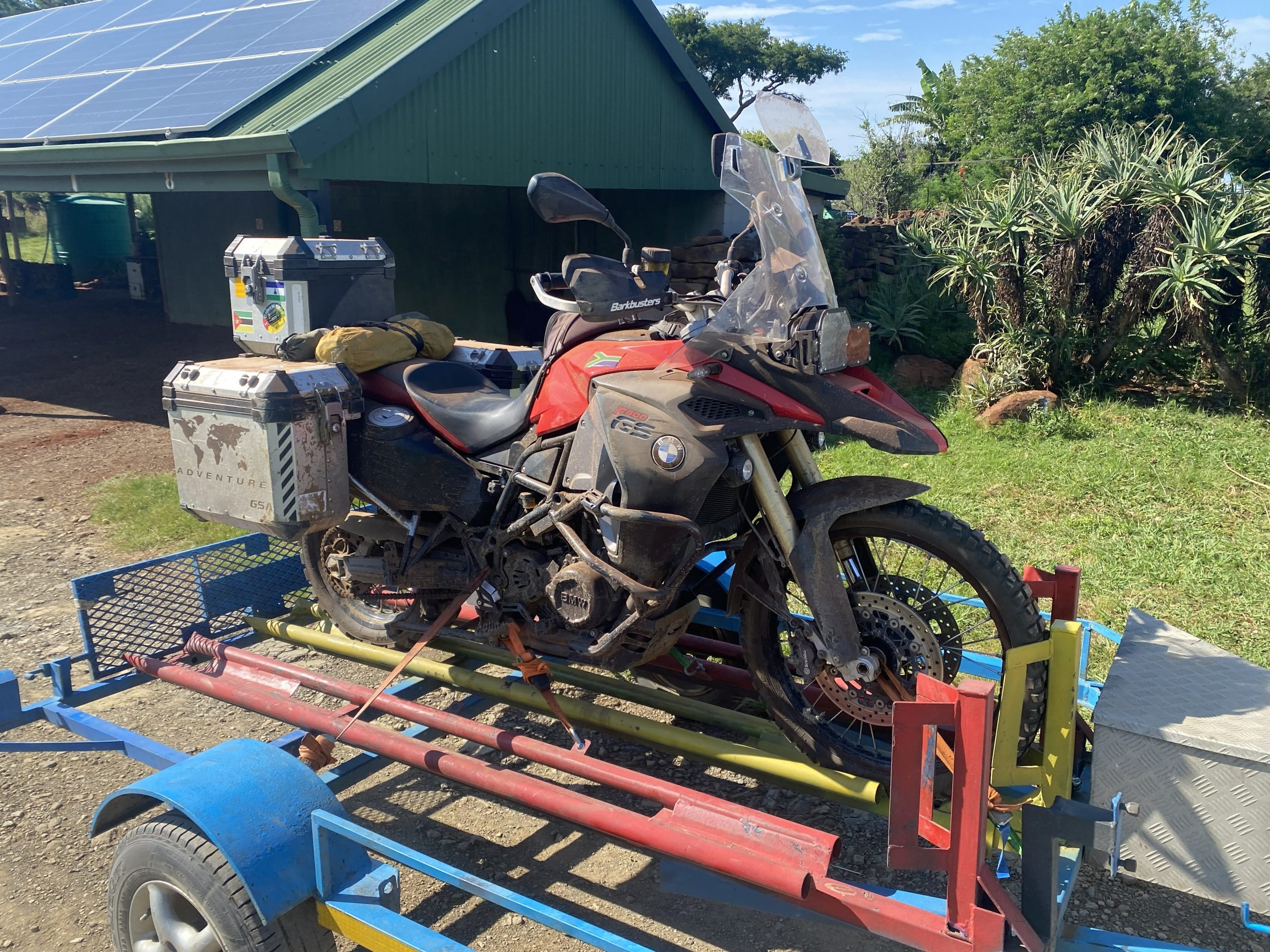
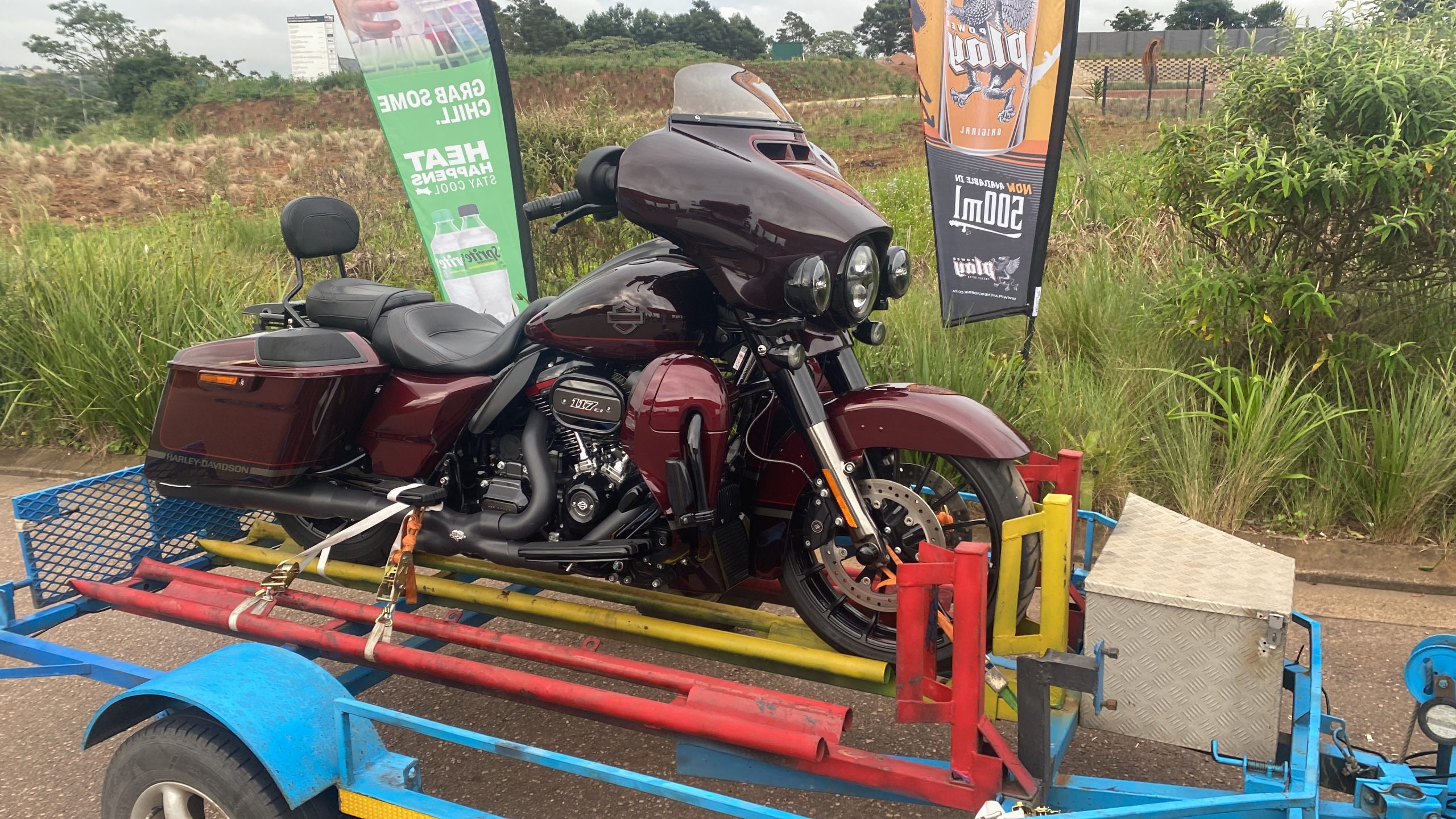
- Bike is loaded—typically ramped or winched, then securely strapped using soft ties, wheel chocks, or covered with blanket wrap for protection.
-
Transit:
- Reputable providers allow transit tracking via SMS or call updates.
- Be aware of possible border or weather delays, especially during peak periods or adverse road conditions.
-
Delivery & Handover:
- Receive notification of arrival window.
- Meet for final inspection at destination (repeat of documentation and condition check).
- Only sign off once satisfied with bike condition.
Timeframes: Cross-border moves are rarely same-day. Delays due to customs, ferries, or infrastructure—especially on rural routes or smaller borders—are to be expected.
Real-World Example: Transporting an Adventure Bike from Gauteng to Windhoek
Scenario:
Eli owns a 2022 BMW R1250GS Adventure he purchased from a seller in Pretoria, but is based in Windhoek, Namibia. Riding it himself isn’t an option due to work commitments and border-crossing anxiety.
- Route: Pretoria to Windhoek (approx. 1,470 km)
- Bike: BMW R1250GS Adventure (fully loaded, high-value)
- Booking: Arranged via a South African transport comparison platform for consolidated enclosed transport, booked 2 weeks in advance.
- Cost: R10,000 (including customs clearance, comprehensive insurance, and door-to-door collection/delivery)
- Timeline: 6 days (including a 2-day unexpected customs processing delay at the Ariamsvlei border)
- Outcome: Bike arrived undamaged, documentation and insurance were thoroughly checked by both parties, with follow-up calls from the platform ensuring satisfaction.
The process was smooth primarily because all documents were in order, the provider was transparent and accountable, and the bike was prepped carefully—avoiding damage and unnecessary border hassles.
Risks, Common Mistakes, and How to Avoid Them
Despite best intentions, cross-border motorcycle transport has real hazards. Here are common pitfalls and how to sidestep them:
- Damage in Transit: Most likely during loading/unloading (especially with heavy or delicate models), or due to inadequate securement. Always insist on soft straps, covered transport for high-value bikes, and visual pre-inspection.
- Insurance Gaps: Many assume the basic Goods in Transit (GIT) covers cross-border loss/theft—it may not. Specify SADC or international insurance upfront, and get the policy in writing.
- Scams/Unreliable Providers: Always verify company registration, insurance, and genuine client reviews. Avoid paying full amounts upfront; a deposit is standard, with remainder on delivery.
- Poor Documentation: Missing NaTIS, incomplete customs forms, or unsigned inspection sheets can cause refusals at borders or collection points.
- Unrealistic Expectations: Never rely on “guaranteed” same-day or weekend moves, especially during wet season or high crime periods—delays at borders and loading are common.
- Improper Preparation: Leaving valuables, not draining the tank below half, or fitting last-minute parts can result in loss or extra charges.
If in doubt, consult Arrive Alive, Department of Transport, or recognised local biking forums for safety tips and regulatory updates.
How to Choose a Reliable Motorcycle Transport Provider
There’s no shortage of companies or informal operators in this space, but standards and reliability vary widely. Compare service providers using these criteria:
- Customer Reviews and References: Look for Google/HelloPeter reviews, forum testimonials, and recent client references (especially for SADC routes).
- Proof of Insurance: Ask for a certificate specifying cross-border coverage, not just local GIT cover.
- Transparent Communication: Are they willing to discuss the process, provide updates, and clarify what’s included/excluded?
- Appropriate Equipment: Specifically ask about their loading ramps, tie-downs, trailers (open/enclosed), and how bikes are protected.
- Professional Credentials: Registration with the Department of Transport, relevant SADC permits, or association with recognised logistics or motorcycle industry bodies.
Avoid cash-only deals, unbranded vehicles, or operators who can’t produce paperwork or proper contacts. Independent platforms can help compare quotes, but verify suppliers before committing.
Cost-Saving Strategies for Cross-Border Motorcycle Transport
- Flexible Scheduling: Opt for shared loads or “next available” rather than dedicated urgent shipments to reduce cost.
- Consolidate Transport: If you’re a dealer or group of friends, moving multiple bikes together often unlocks bulk discounts.
- Prepare Properly: Doing your own loading assistance or meeting at a main depot (rather than home collection) can lower costs.
- Book in Advance: Better rates (and wider provider options) are available at least 2–3 weeks out.
- Negotiate Transparently: Ask for written quotes with all costs and ask about off-peak rates or unpublished deals.
- Compare Providers: Use a reliable, independent comparison platform to avoid paying a premium for basic, non-specialist freight services.
Warning: Never compromise on insurance for the sake of initial savings—it typically costs far less than replacing or repairing a bike damaged or stolen in transit.
Frequently Asked Questions: Cross-Border Motorcycle Transport
- What paperwork is required for SADC cross-border bike moves?
You’ll need proof of identity, NaTIS papers, proof of ownership/purchase, and sometimes temporary export/import permits. Your provider should clarify for each country as requirements can change. - How long does it take to move a bike to Botswana, Namibia, or Mozambique?
Transit times vary but typically range from 1–4 days for Botswana, 3–7 for Namibia, and 2–5 for Mozambique, not counting unexpected border or weather delays. - Is insurance included, and what type do I need?
Basic Goods in Transit insurance is standard but may not cover theft, cross-border, or full value. For high-value or sentimental bikes, opt for comprehensive cover that specifies SADC regional applicability. - Can I transport accessories or luggage with the bike?
Usually small, attached items are permitted, but loose luggage or personal gear may be excluded for insurance reasons; check up front and declare any extras. - What happens if my bike is damaged or delayed at the border?
Report damage immediately on delivery and document it with photos; reputable providers assist with claims. Delays are often beyond provider control—choose operators with transparent update systems and clear policies.
Conclusion & Next Steps: Move Your Bike Safely and Informed
Moving a motorcycle across SADC borders from South Africa is genuinely achievable, whether for sales, relocations, or adventures, provided you’re prepared for paperwork, honest about risks, and choose your transport provider wisely. Costs, coverage, and timelines vary—always compare, review, and confirm documentation.
The safest, most affordable results are achieved with advance planning, thorough documentation, and by insisting on proper insurance and inspection at every stage. Reputable comparison and coordination platforms make it easier to judge and select the right provider, giving South African riders and buyers a real edge in managing their transport investment across borders. Ride—and move—with confidence by applying these locally relevant, practical guidelines.