
Questions to Ask Before Booking Motorcycle Transport: Protect Your Bike and Your Budget in South Africa
- Research your transporter’s insurance, reputation, and experience before booking a service.
- Costs in South Africa vary widely (R1,500–R6,000+), with timelines affected by distance, route popularity, and weather.
- Know what documentation and inspection steps are needed, and how to check for professional reliability and protection.
- This guide gives practical, locally relevant tips to help buyers, sellers, dealers, and riders make informed decisions.
Introduction
Buying or selling a motorcycle online? Relocating for work from Durban to Cape Town? Purchased your dream bike from a dealership in Johannesburg? If you find yourself needing to move a bike across South Africa, you’re not alone. Motorcycle transport services are in high demand—whether you’re an enthusiast, dealer, buyer, or seller. Your concern is shared by many: How can you ensure your motorcycle arrives safely, on time, and at a fair price?
This article is for South African bike owners and anyone considering moving a motorcycle across distances—from major metros like Johannesburg, Durban, and Cape Town, to smaller towns or rural areas. You’ll learn the essential questions to ask before booking motorcycle transport, how the process works, what to watch out for, and smart strategies to keep your bike (and bank balance) protected.
Getting this decision right matters: your motorcycle is valuable, the costs and risks are real, and logistics in South Africa come with unique challenges.
Understanding Motorcycle Transport in South Africa
Motorcycle transport isn’t just for dealerships and importers. More private buyers and sellers are choosing to move bikes via professional carriers—especially across provinces where a casual ride isn’t feasible or safe. Typical scenarios include:
- Online marketplace transactions—facilitated by sites like AutoTrader, BikeHub, and Gumtree, often requiring transport between distant cities.
- Dealer transfers—moving stock between branches, or delivering to customers.
- Relocation—job changes, studies, or lifestyle moves from, say, JHB to CPT or DBN to PE.
- Event attendance—racing, rallies, or festivals in other provinces.
South Africa’s geography introduces real complexities:
- Long distances—Popular routes like Johannesburg to Cape Town (1,400km+), Durban to JHB (570km), Port Elizabeth to Cape Town (750km).
- Varied infrastructure—Busy highways between metros, but secondary roads in rural provinces can be rough, with risks from potholes and weather.
- Security concerns—Theft and damage risks are higher at poorly regulated depots, or when left unattended at handover points.
The bottom line: Understanding how SA’s transport realities impact timing, cost, and safety is key to making a smart booking.
Key Factors That Influence Cost, Safety, and Timing
Before you agree to any motorcycle transport service, weigh the following practical factors. These will affect your experience—and your total cost.
1. Distance & Route Popularity
- Longer distances (e.g., JHB–CPT) cost more, but popular routes are serviced more frequently, often with shared load savings.
- Outlying rural areas may attract surcharges due to detours and lower demand.
2. Bike Size & Value
- Transporting a large touring bike (like a BMW R1250GS) typically costs more than a small delivery scooter.
- Expensive or fragile bikes may require enclosed or premium handling—adding cost.
3. Transport Method
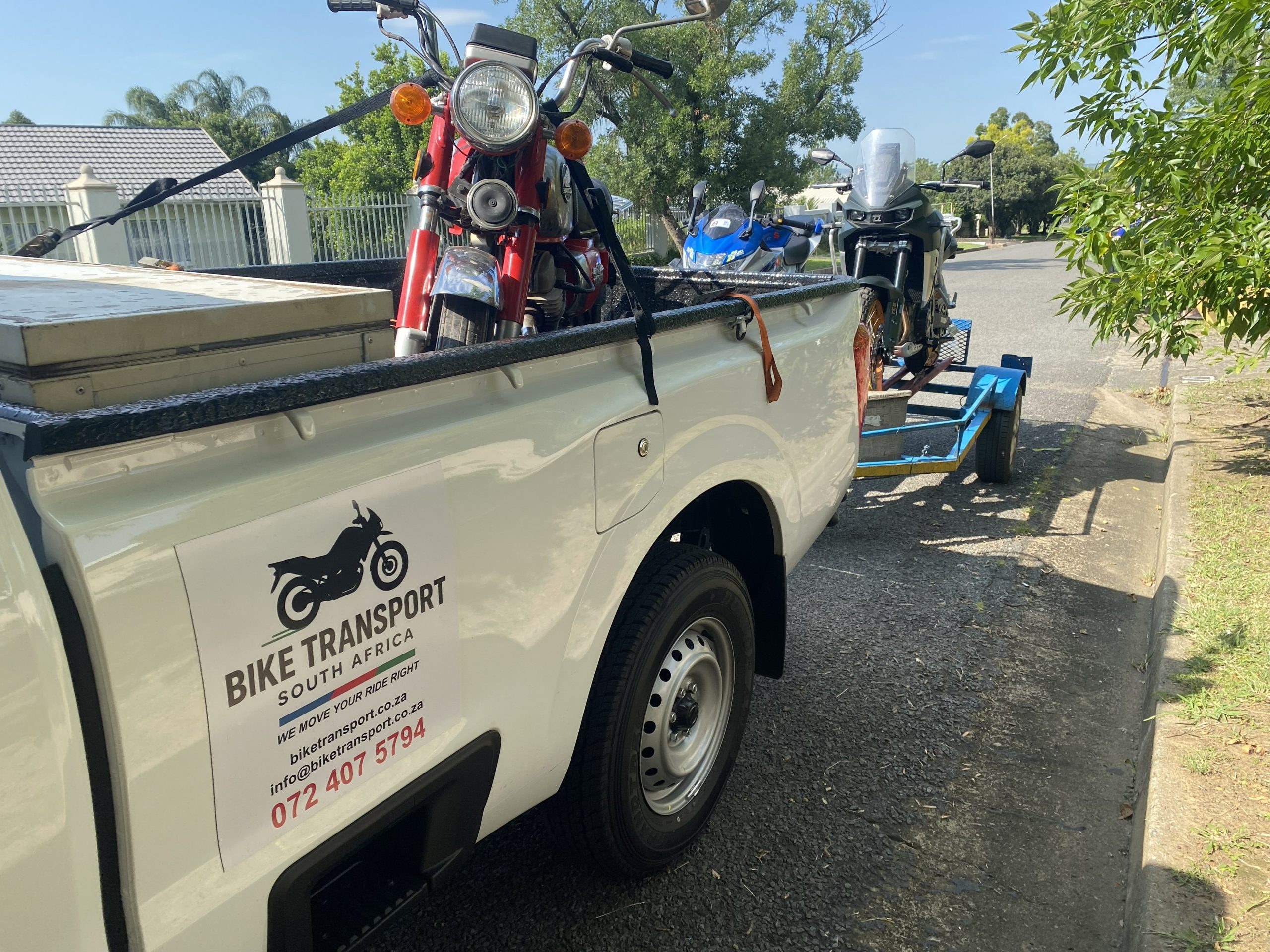
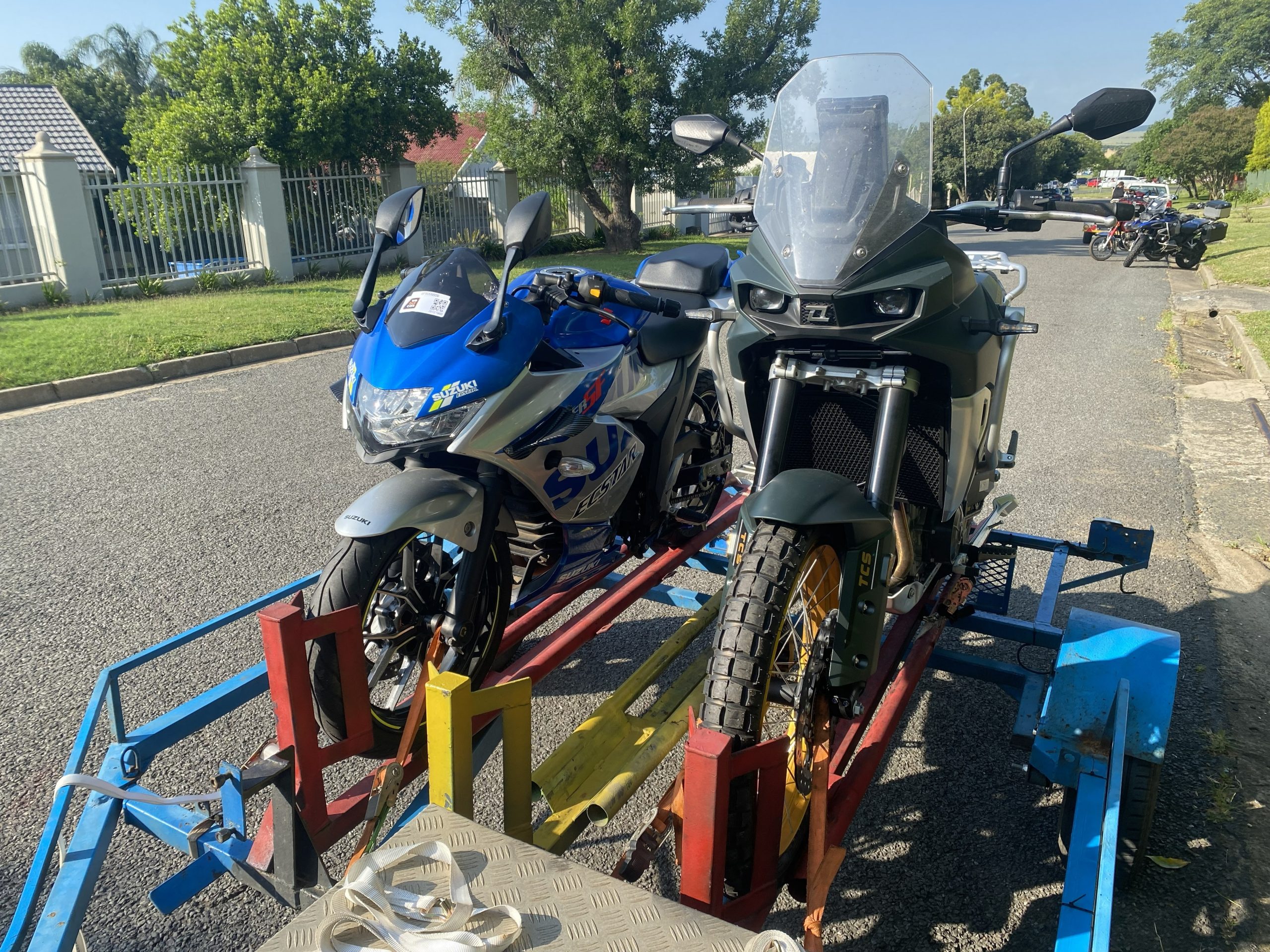
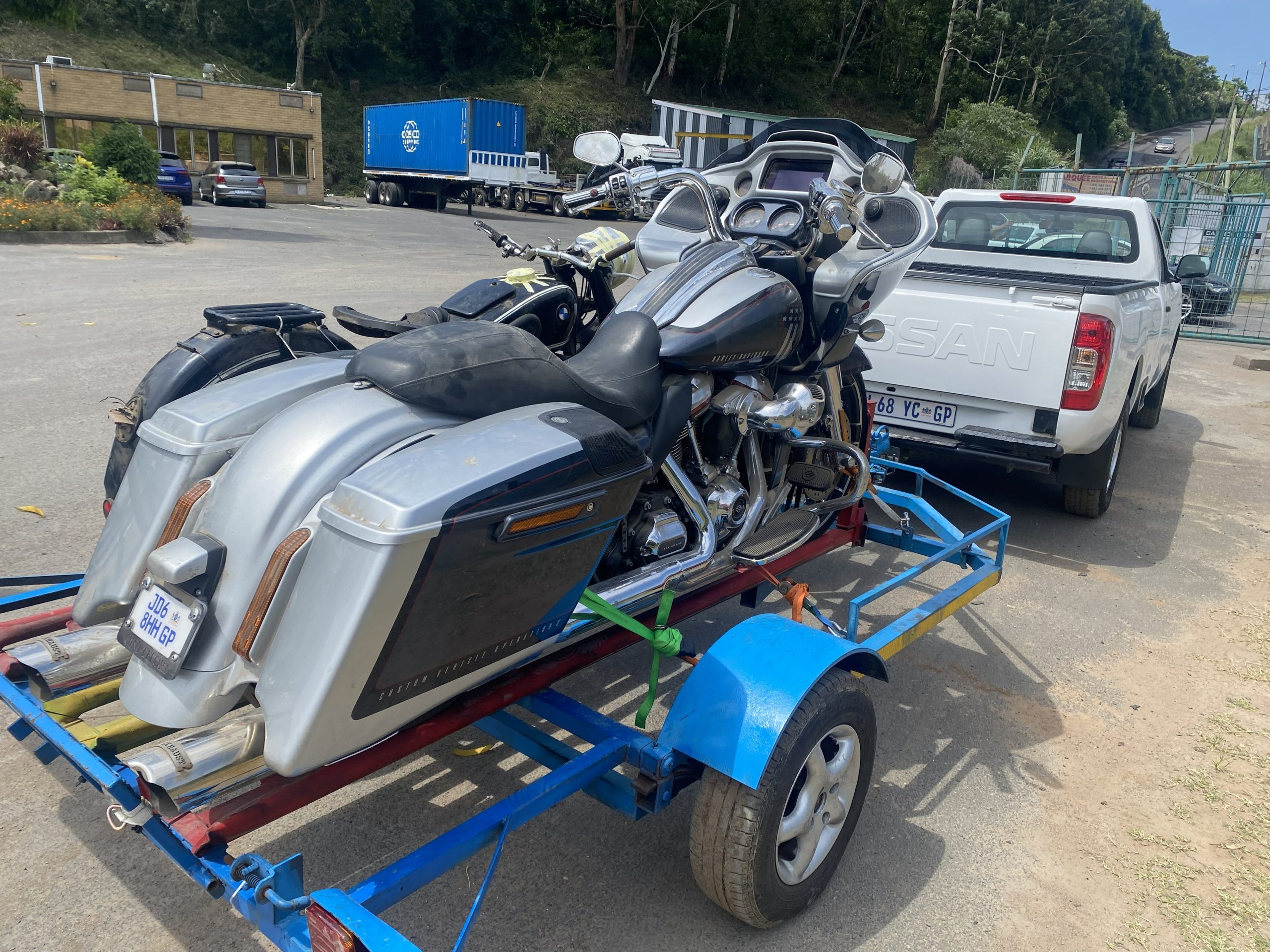
- Open trailer: More affordable, but exposed to weather, dust, and debris (common for budget moves or standard bikes).
- Enclosed trailer/truck: Provides weather and theft protection—ideal for rare, high-value, or vintage motorcycles.
- Shared load: Cost-effective if coordinated with other deliveries, but might extend delivery times.
4. Insurance Coverage
- Basic options include Goods in Transit (GIT) cover, but limits and exclusions apply.
- Check if the carrier’s liability insurance matches your bike’s replacement value. Additional cover may be needed on high-value models.
5. Pickup & Drop-Off Accessibility
- Central metro pickups are easier and often cheaper.
- Remote, farm, or informal locations may slow down schedules and increase costs.
6. Scheduling Flexibility
- Wider collection/delivery availability lowers price.
- Urgent or after-hours moves often cost more, with fewer providers able to assist.
Typical Price Ranges (as at 2024):
| Route Example | Transport Type | Price Range (R) | Typical Timeline |
|---|---|---|---|
| JHB–CPT (1,400km+) | Shared Open Trailer | R2,500–R5,500 | 3–7 days |
| DBN–JHB (570km) | Open or Enclosed | R1,700–R3,500 | 2–5 days |
| PE–CPT (750km) | Shared Enclosed | R2,000–R4,500 | 3–6 days |
| Short Metro (within city) | Open Trailer | R800-R1,700 | 1–2 days |
Note: Actual rates will vary by season, demand, and fluctuating fuel costs. Reliable providers will only offer firm quotes after confirming bike details and destinations.
How Motorcycle Transport Actually Works (Step-by-Step)
Booking motorcycle transport in South Africa is generally a straightforward process—if you choose a reputable service and understand each step involved.
1. Requesting a Quote
- Compare options via independent platforms that vet providers, or approach transporters directly.
- Provide full details: Pick-up and drop-off addresses, bike make/model/year, running condition, preferred dates, and any special requirements.
2. Receiving Offers & Reviewing Terms
- Check for insurance details, timeline commitments, cancellation fees, and specific loading methods.
- Ask for company registration details and references if uncertain.
3. Securing the Booking
- Most reputable carriers require a written agreement and deposit (typically 10–30%).
- Get confirmation of collection windows, contacts at both ends, and instructions for prepping your bike.
4. Preparing the Motorcycle
- Clean the bike for accurate pre-shipment inspection.
- Record photos of condition from all sides.
- Remove loose accessories (GPS units, luggage, etc.) or label for safe packing.
- Reduce fuel level to a minimum (usually <1/4 tank) and check tyre pressures.
5. Documentation
- SA transport regulations (see Arrive Alive, RTMC) may require:
- Copy of owner’s ID
- Proof of ownership (NaTIS papers, sales invoice)
- Signed release form if not present at handover
6. Pickup and Inspection
- Attend the handover in person where possible, or appoint a trusted representative.
- Confirm the provider logs a detailed condition report, referencing your photos.
- Agree on any pre-existing damage notes in writing.
7. In Transit
- Some companies offer GPS tracking or regular updates; ask for realistic ETAs.
- Factor in possible weather delays (heavy rain, wind, especially on long rural stretches).
8. Delivery & Final Inspection
- Check the motorcycle for new scratches or damage before accepting final delivery.
- Sign off only once satisfied—or note any discrepancies with photos and written comments.
Real-World Example: Cape Town to Johannesburg – Adventure Bike Purchase
Scenario: Cindy, a Cape Town-based buyer, finds a 2019 KTM 790 Adventure listed by a dealer in Kempton Park, Gauteng. The bike is in excellent condition, worth R145,000, and needs to be delivered within two weeks.
- Route: Kempton Park (JHB) to Durbanville (CPT), approx. 1,400km
- Transport Type: Shared load, enclosed trailer (requested for weather/theft protection)
- Total Cost: R4,200 (including basic GIT insurance up to R100,000; arranged extra top-up cover for additional R320)
- Timeline: Collection arranged within three working days, delivered to Cape Town on day 7
- Challenges: Metro traffic delay in Johannesburg, rainy weather closed the N1 for 12 hours
- Outcome: Bike delivered in perfect condition; both buyer and dealer completed digital inspection forms and exchanged handover photos; buyer pleased with prompt, transparent communication throughout
Key Lessons: Proactive checks on insurance and clear communication prevented surprises. Shared loading saved costs but added one extra day to the timeline.
Risks, Mistakes, and How to Avoid Them
Transporting your bike introduces risks—some avoidable, some unavoidable. Minimise problems with these tips:
Common Risks
- Accidental damage during loading/unloading (scratches, bent levers, scuffed fairings), especially on open trailers or when improperly strapped.
- Theft or loss, particularly at unsecured storage facilities, overnight stops in crime-prone zones, or handovers completed “sight unseen.”
- Insurance gaps: Carrier’s GIT policy may have low limits or exclude cosmetic/bike-specific accessories.
- Scams/unreliable operators—fly-by-night transports demand full payment upfront, lack web presence, or cannot provide proof of licenses and insurance.
- Scheduling misunderstandings: Vague ETA commitments lead to missed handovers and storage fees.
How to Avoid Problems
- Insist on detailed condition reporting and photo evidence at both pickup and delivery.
- Read the insurance policy (not just the summary): Understand the process and limits for claims.
- Avoid paying full fee upfront—reputable providers typically request a deposit and balance on safe delivery.
- Use comparison and review platforms that independently verify transporter credentials.
- Clarify and confirm all arrangements in writing—dates, addresses, contacts.
- Check the loading method—ask about ramp type, strapping points, and wheel chocks for your bike size/category.
How to Choose a Reliable Motorcycle Transport Provider
The SA market includes everything from veteran hauliers to opportunistic newcomers and part-timers. Prioritise trust and professionalism:
- Research online reviews (Google, HelloPeter, BikeHub, Facebook). Look for consistent themes; a perfect record may not always be real.
- Ask for proof of insurance (policy schedule, not just a “yes” in conversation). Check expiry dates and cover value.
- Check fleet and loading equipment: Reliable operators use purpose-built ramps, wheel restraints, and enclosed or padded trailers for sensitive bikes.
- Confirm business registration (CIPC lookup), and ask for VAT and operating license if moving bikes commercially or cross-border.
- Evaluate communication—Timely, clear, and proactive is a good sign. Delayed or vague replies can spell trouble down the road.
- Ask about tracking and updates, especially for high-value or long-distance moves.
Cost-Saving Strategies
You can keep your transport budget in check without sacrificing safety or reliability. Here’s how:
- Be flexible with timing: Shared loads (multi-bike transport) usually mean lower per-bike costs if you can wait for the next scheduled run.
- Arrange metro-to-metro delivery: Out-of-town or peri-urban addresses often increase rates due to added risk/logistics.
- Remove accessories and loose items in advance. Fewer valuables = less risk = lower insurance surcharges.
- Use independent quote comparison platforms—gives access to vetted providers and keeps pricing competitive.
- Consider off-peak (mid-month or mid-week) bookings, avoiding year-end and holiday periods when demand peaks and prices rise.
- Prepare all documents and access info ahead of time—missed handovers due to paperwork or access issues can result in costly delays/storage charges.
Frequently Asked Questions
How do I know if a bike transporter is legitimate in South Africa?
Look for business registration (CIPC), clear contact information, a professional website, visible reviews, and current insurance. Ask for proof and request references. Use platforms that perform independent verification.
What documents will I need to provide for a cross-province motorcycle transport?
Typically, you’ll need a copy of your ID, proof of bike ownership (NaTIS), and a signed handover or authorisation letter. Dealers may ask for additional transfer-of-ownership paperwork.
What happens if my bike gets damaged or lost during transport?
First, inspect the bike at delivery, document with photos, and report any issues immediately. Claims are processed against the transporter’s GIT policy (with limits); if more cover is needed, top-up with your own insurer before shipping. Always agree on the process before handing over your bike.
Can I transport a bike that isn’t running?
Yes, but notify the transporter in advance. Non-runners require extra manual handling or winching, potentially attracting a premium (R300–R1,000+ extra). Clarify this upfront to avoid last-minute problems.
Is open trailer transport safe for valuable or vintage motorcycles?
It’s more affordable, but exposes bikes to weather, theft, and road debris. For high-value or vintage bikes, request enclosed transport even if it costs more (extra R700–R2,500 on major routes). Balance cost against risk based on your bike’s value.
Conclusion & Next Steps
Choosing the right motorcycle transport service in South Africa means weighing safety, cost, and trust. Always ask the right questions—about insurance, methods, equipment, and credentials. Understand the process from booking through to final delivery, and use independent comparison tools or platforms for extra peace of mind.
As with any valuable asset, protecting your interests starts with informed choices. Use this guide as your checklist when you next move a motorcycle—whether you’re a buyer, seller, dealer, or private rider—so your prized machine gets where it needs to go, safely and securely.
Disclaimer: Information correct as of June 2024. Prices, practices, and regulations may change; always confirm key details with your chosen provider. For the latest transport regulations, consult Arrive Alive or the Department of Transport.